How the Body Stores Unprocessed Emotions
Our bodies often communicate what our minds haven’t fully processed yet. Emotional energy doesn’t just disappear—when left unaddressed, it can settle into different areas of the body and show up as tension, discomfort, or unexplained fatigue. The illustration above highlights common places where unprocessed emotions may be stored and the feelings often associated with each area.
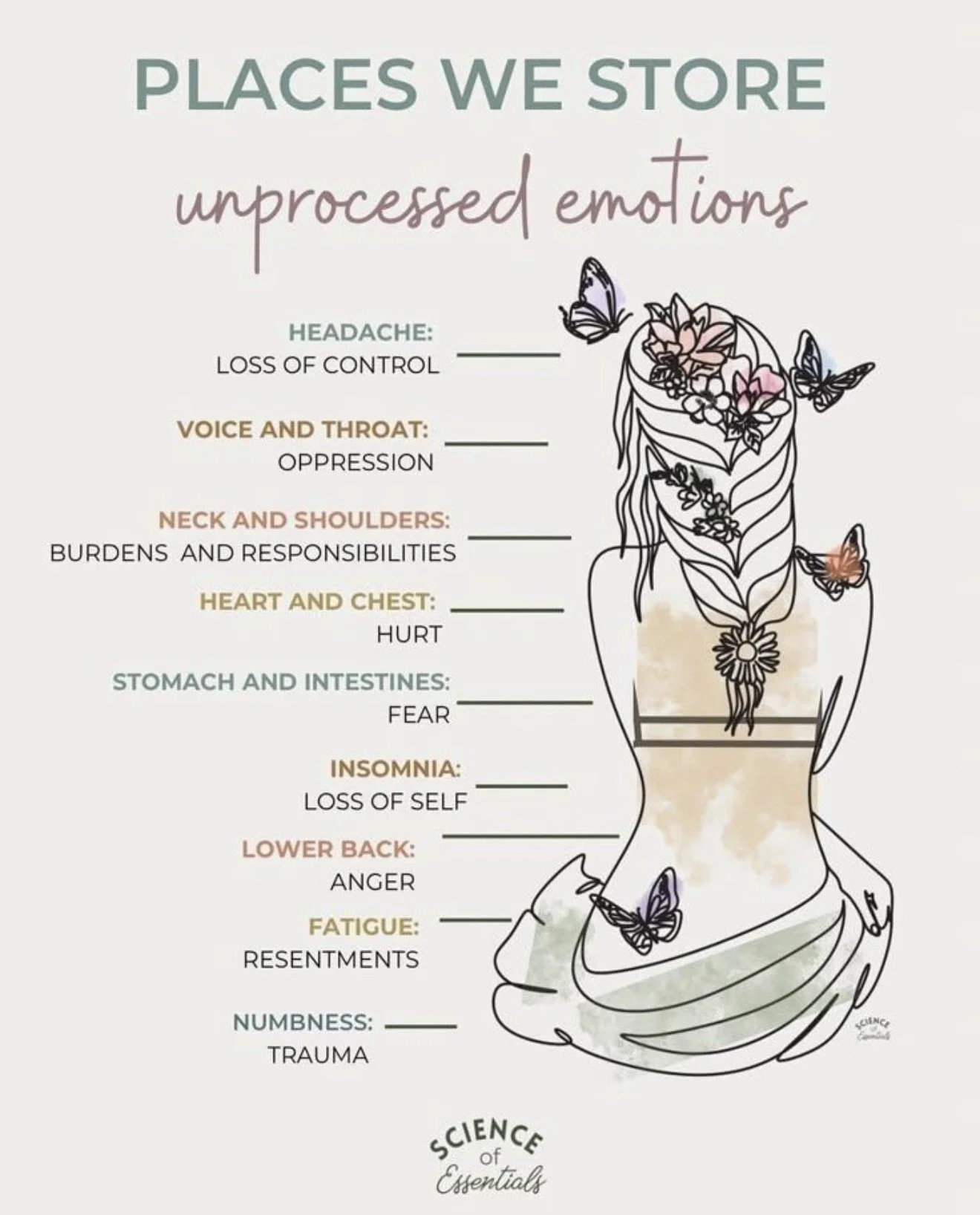
Recognizing where emotions show up in the body can be the first step toward releasing what’s been held. Gentle self-care, grounding practices, mindfulness, and supportive tools—like crystals, journaling, or energy work—can help restore balance.
Head & Mind – Loss of Control
Headaches or pressure in the head can appear when life feels overwhelming or unpredictable. It often reflects mental overload or difficulty releasing control.
Voice & Throat – Oppression
Tightness in the throat may surface when emotions or words are held back. This often relates to feeling unheard, silenced, or unable to express your truth.
Neck & Shoulders – Burdens and Responsibilities
This area tends to hold the weight of obligations. Stress, tension, and stiffness here may signal that you’ve been carrying more than you can comfortably manage.
Heart & Chest – Hurt
Feelings of grief, heartbreak, or emotional vulnerability often show up around the chest. This space reflects our deepest connections, compassion, and emotional openness.
Stomach & Intestines – Fear
Anxiety and fear frequently settle in the digestive system. Butterflies, nausea, digestive disruption, or tightness can be the body’s way of signaling emotional unease.
Insomnia – Loss of Self
Difficulty sleeping may indicate a disconnect from your needs, identity, or sense of direction. It often appears when you’re running on empty emotionally or mentally.
Lower Back – Anger
Tension or aching in the lower back can reflect frustration, resentment, or suppressed anger—especially when you’ve been supporting others without enough support for yourself.
Fatigue – Resentments
Lingering resentments can drain energy. Exhaustion that doesn’t come from physical exertion may point to emotional heaviness you’re ready to release.
Numbness – Trauma
When emotions feel too overwhelming, the body may go into protective numbness. This response can show up physically, mentally, or emotionally as a way to cope.
