Crystals That Fade in Sunlight: A Fort Myers Guide to Protecting Your Collection
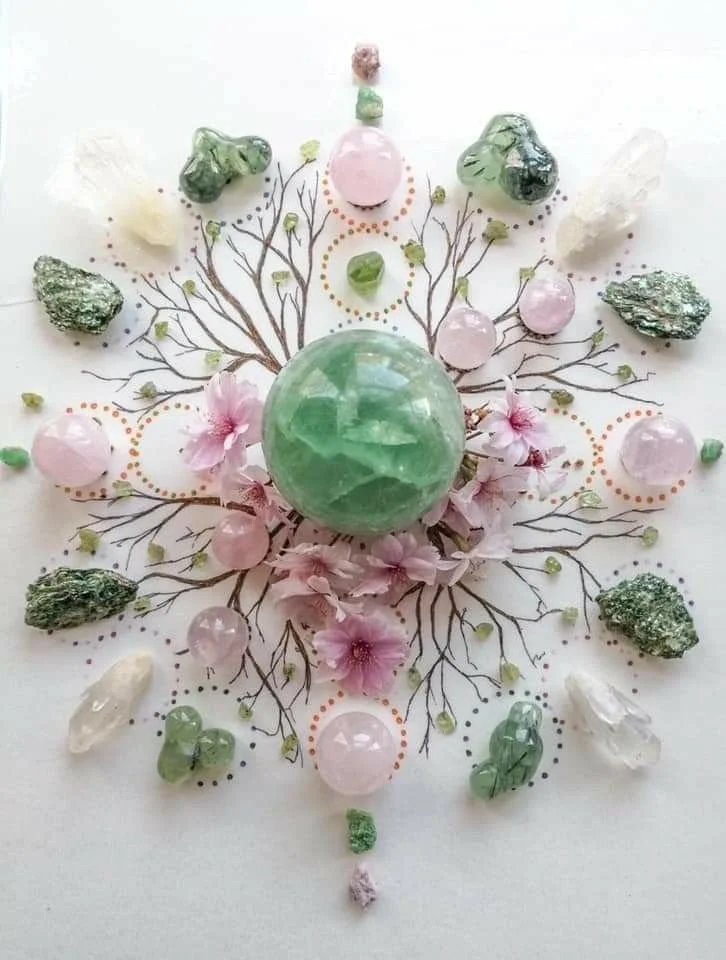
If you live in Southwest Florida, you have already seen what the sun does to a car dashboard or a patio cushion left out too long. The same thing happens to your stones. Crystals that fade in sunlight are more common than most new collectors realize, and a windowsill display that looks rich and vivid in January can be visibly dull by the time hurricane season rolls in. This guide covers which stones are most at risk in Fort Myers, which ones actually benefit from sun exposure, how to charge them safely, and where to place your collection in a typical Florida home.
Why Florida Sun Is Tougher on Crystals Than Most Climates
Fort Myers averages around 270 sunny days a year. The UV index here sits in the "very high" range from roughly April through October, which is most of the year. Even indirect light coming through a sliding glass door or a lanai window carries enough UV to bleach color from sensitive stones over a few months.
Heat compounds the problem. A windowsill in a typical SWFL home can hit 110 degrees on a July afternoon. Some crystals that fade in sunlight, like fluorite and selenite, react to that heat as much as they do to the light itself. Stones can also crack from rapid temperature swings, especially if you bring them in cold from an air-conditioned room and set them on a hot ledge.
Crystals That Fade in Sunlight: The Light-Sensitive List
These are the stones to keep out of direct sun. Most will visibly lose color within weeks to months of regular sun exposure here in Cape Coral, Fort Myers, and Naples:
Amethyst, ametrine, and rose quartz, which are the most commonly faded stones in Florida homes
Heat-treated citrine, since natural citrine is far more stable
Fluorite, kunzite, hiddenite, and morganite
Aquamarine, apatite, and tanzanite
Celestite, danburite, prehnite, and rhodochrosite
Selenite, halite, and aragonite, which can also degrade from humidity
Opal, turquoise, and dyed howlite
Labradorite, moonstone, and sodalite
Charoite, chrysoprase, lepidolite, malachite, and serpentine
Amber, coral, and colored varieties of beryl, calcite, spinel, topaz, and zircon
Epidote and vivianite
The damage is permanent. A faded amethyst does not recover color in the dark.
Crystals That Actually Thrive in Sunlight
The good news is that plenty of stones are sun-stable, and many even benefit from short, intentional sun charging:
Clear quartz, rutilated quartz, and fire quartz, also called hematoid quartz
Most agates, including banded, fire, dalmatian, zebra, blue lace, and mookaite jasper
Carnelian, red jasper, sunstone, garnet, and tiger's eye
All obsidian varieties, including snowflake, mahogany, and apache tears
Black tourmaline, black onyx, hematite, pyrite, and shungite
Bloodstone, bronzite, chalcedony, and iolite
Nephrite jade, jadeite, petrified wood, rhodonite, and zoisite
Lava stone, septarian, amazonite, and goldstone
Natural untreated citrine, plus desert rose under brief sun only
If a stone is dark, opaque, or quartz-family with no dye, it is usually safe.
How to Display and Charge Your Collection in a Florida Home
Identify each stone before placement. If you bought from a shop that did not label the variety, ask. Mislabeled stones are the most common reason collectors accidentally fade pieces.
Move crystals that fade in sunlight at least four feet back from any south or west-facing window. North-facing rooms are the safest in SWFL homes.
Charge sun-safe stones in early morning sun only, before 10 a.m. Twenty to thirty minutes is plenty. Florida midday sun is too intense even for stable stones.
Use moonlight for sensitive stones. A full-moon charge on a lanai or screened porch works for everything on the fade list.
Rotate your display every few weeks so no single stone gets steady exposure in the same spot.
What Replacing a Faded Crystal Actually Costs
Replacement cost depends on what you lose. Tumbled stones sit on the lower end and are easy to swap. Mid-range pieces include cluster specimens, towers, and palm stones, which climb fast for amethyst and fluorite in larger sizes. Premium pieces, including statement geodes, carved figures, and rare specimens like vivianite or charoite, can be tough or expensive to replace at all. Protecting crystals that fade in sunlight is almost always cheaper than rebuilding the collection later.
Why Fort Myers Collectors Shop with Us
Crystals & Collections is a boutique shop on South Tamiami Trail, owned by Sydney, a Licensed Mental Health Therapist who also runs Ataraxia Therapy. Every stone in the shop is ethically sourced and personally selected. We help collectors identify crystals that fade in sunlight before they take them home, recommend display options that work in a typical lanai-style Florida layout, and build collections that last. Browse the full shop for sun-safe pieces, or come in person to see the inventory. We also host workshops, oracle readings, and the Higher Conscious Collective for collectors who want to go deeper.
Visit the Shop or Get in Touch
Stop by at 16387 S. Tamiami Trail, Unit J, Fort Myers, FL 33908, or call (239) 270-5802 if you want help identifying a stone you already own. You can also reach us through our contact page and we will respond within one business day.
